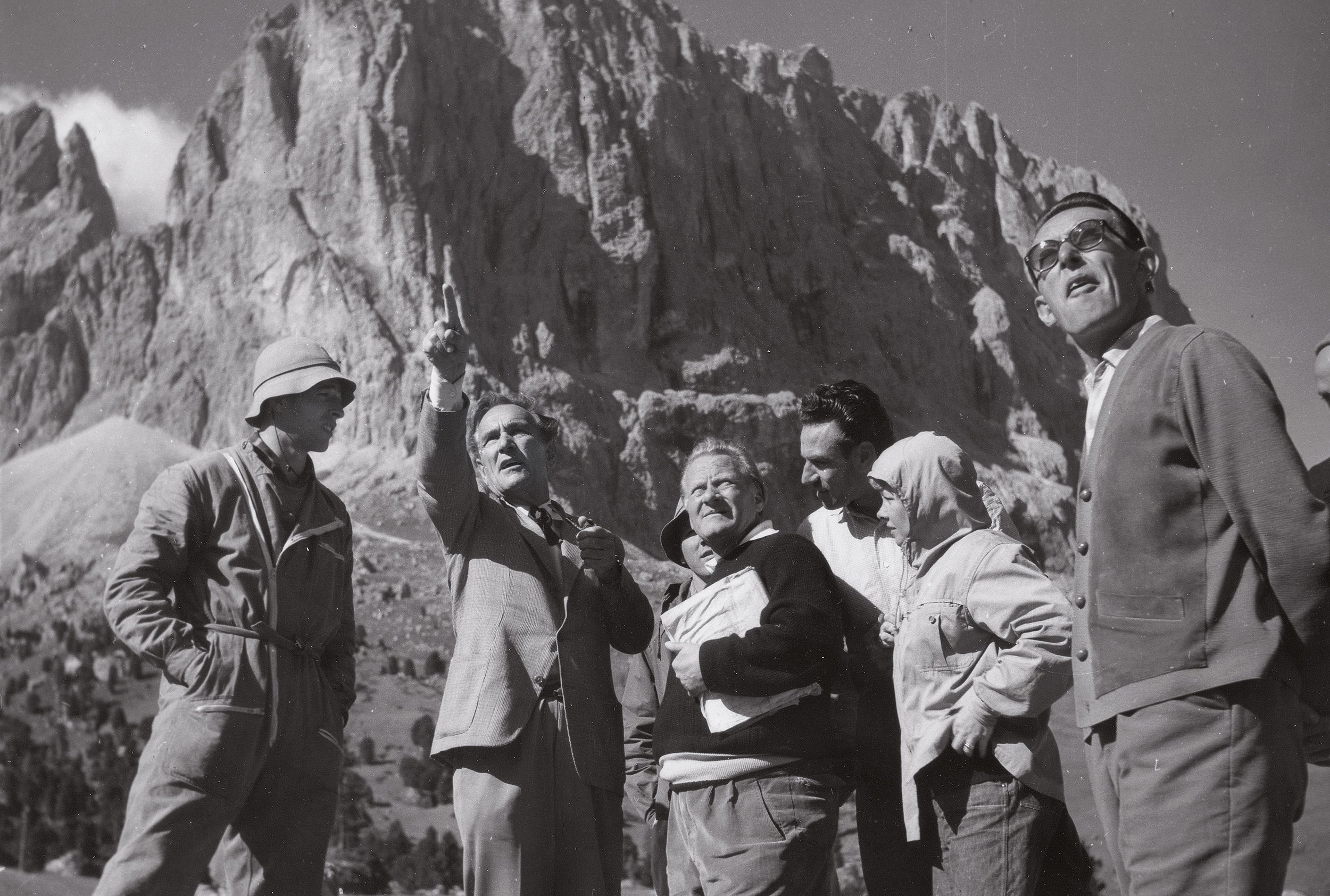
Stories in the valley tell that someone from Selva Val Gardena is said to have tried to ascend the Sassolungo several times as early as 1850. Prisoner to the mountain massif for days, he finally reached the summit and lit a fire. If you were to chance upon the 1870 yearbook of the Austrian Alpine Club, volume VI, you would also read the following sentence: ‘Before Grohmann, Mr Waitzenbauer from Munich had undertaken an ascent of the Sassolungo under the leadership of well-known Pinggera from Solda and a carpenter from Mareo, but in Grohmann’s opinion he had climbed a peak which, although not significantly lagging far behind from his, still couldn’t hold a candle to his summit.’

If one wishes to believe the anecdote from the book by Franz Moroder from 1915, only a few days after Paul Grohmann’s first ascent, two young shepherds reached the summit of the Sassolun-go. They are said to have ascended to the summit without suitable clothing and, what’s more, even barefoot! Why had they gone up there? They wanted to look at the flag that had recently been planted at the top of the Sassolungo.
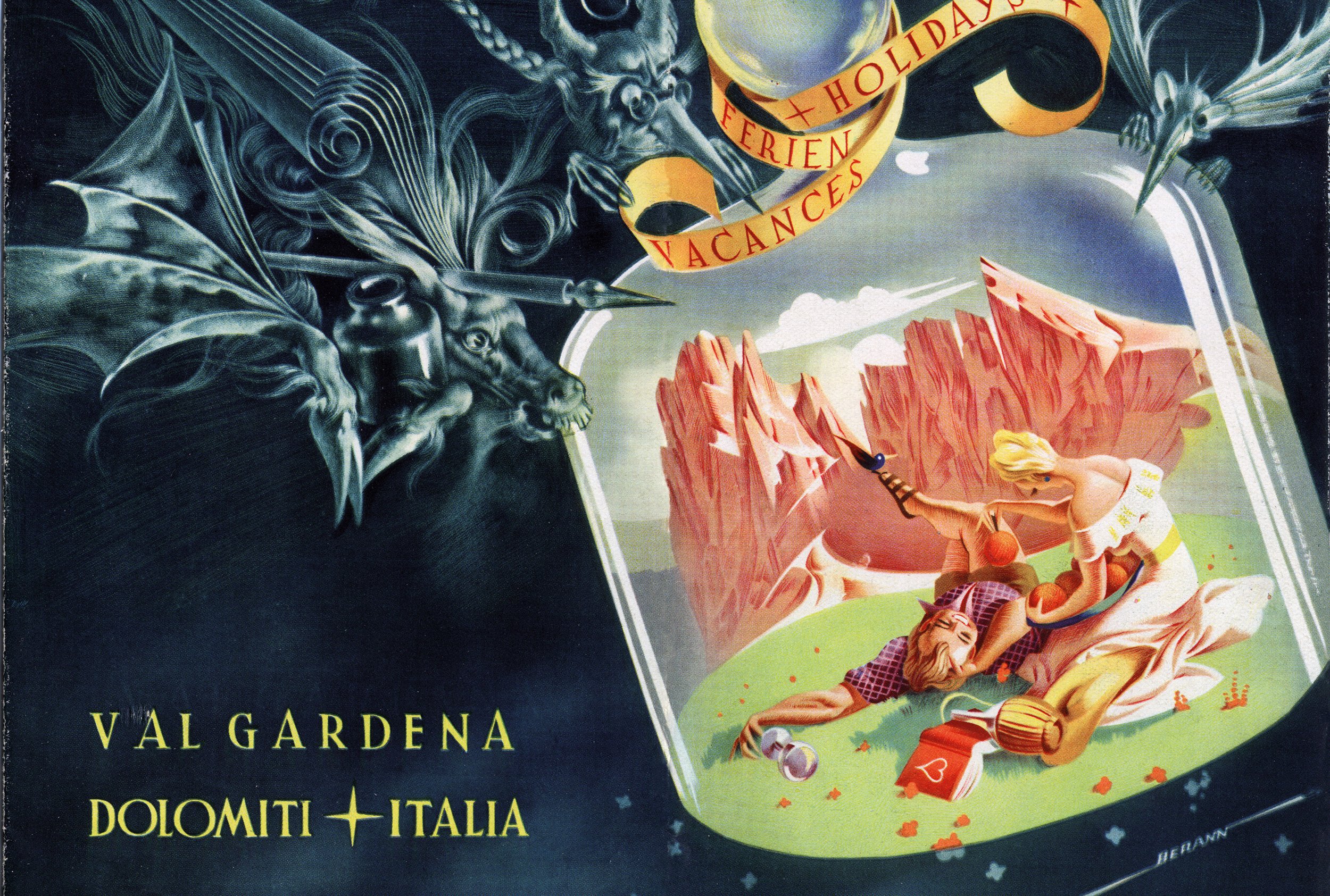
The Sassolungo has been displayed on tourist posters for over 100 years. Already in the thirties, for example, the Ita-lian National Tourist Board (ENIT) used pictures of the Val Gardena mountain to advertise a holiday in the Dolomites – for the average citizen, however, a stay in the mountains at that time was only a dream. The well-known artist Franz J. Lenhart also depicted the Sassolungo on his posters several times. The posters of ‘The prodigal son’ and ‘Escape to the Dolomites’ by Luis Trenker also sported an illustration of the Sassolungo.

If the Sassolungo wears a hat, the weather will be fine. If the Sassolungo has a sabre, the weather will be miserable.

Anyone who has heard this rule before will certainly wonder what it’s all about. For the Sassolungo to get clouds swaying atop its summit, a current needs to be present. When the current meets the mountain, it is lifted upwards. The moisture condenses to a cloud. Behind the mountain the current drops and humidity disappears. The result is a ‘cloud hat’ that promises good weather on a local level. In fact, such a hat is only created in a friendly and stable atmosphere. If fog hangs around the slope, a ‘sabre’, if you will, the weather will be miserable, according to these rules. But since the fog could also just be the remains of a nightly high-altitude fog, this second part of the weather rule is not necessarily correct – so even a Sassolungo featuring a ‘sabre’ can indicate a day full of sunshine.

Unassuming

The bivouac on the Sassolungo

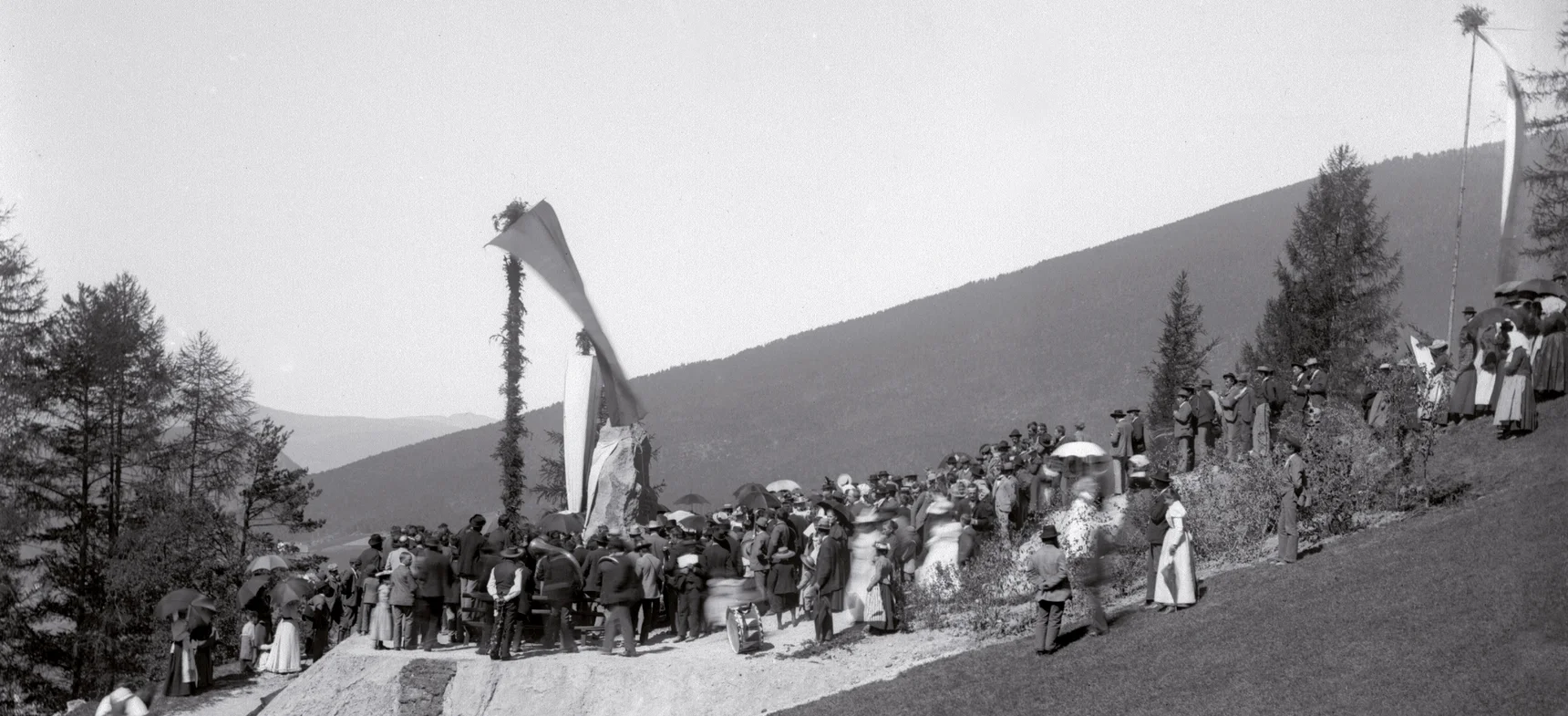
Created as an emergency shelter, the first bivouac in the Dolomi-tes was built in 1935 and ceremoniously opened on 30 September of the same year. Over the years some mountaineers were forced to spend the night outdoors because of the long ascent and the difficult conditions they had to face. The ‘Giuliani Bivouac’ is located below the summit at 3,100 m and offers enough space for 3 reclining or 6 seated persons. The emergency accommodation is equipped with insulation mattresses, blankets and an emergen-cy radio alarm.

Worth seeing

The Virgin Mary on the eastern wall and other religious symbols

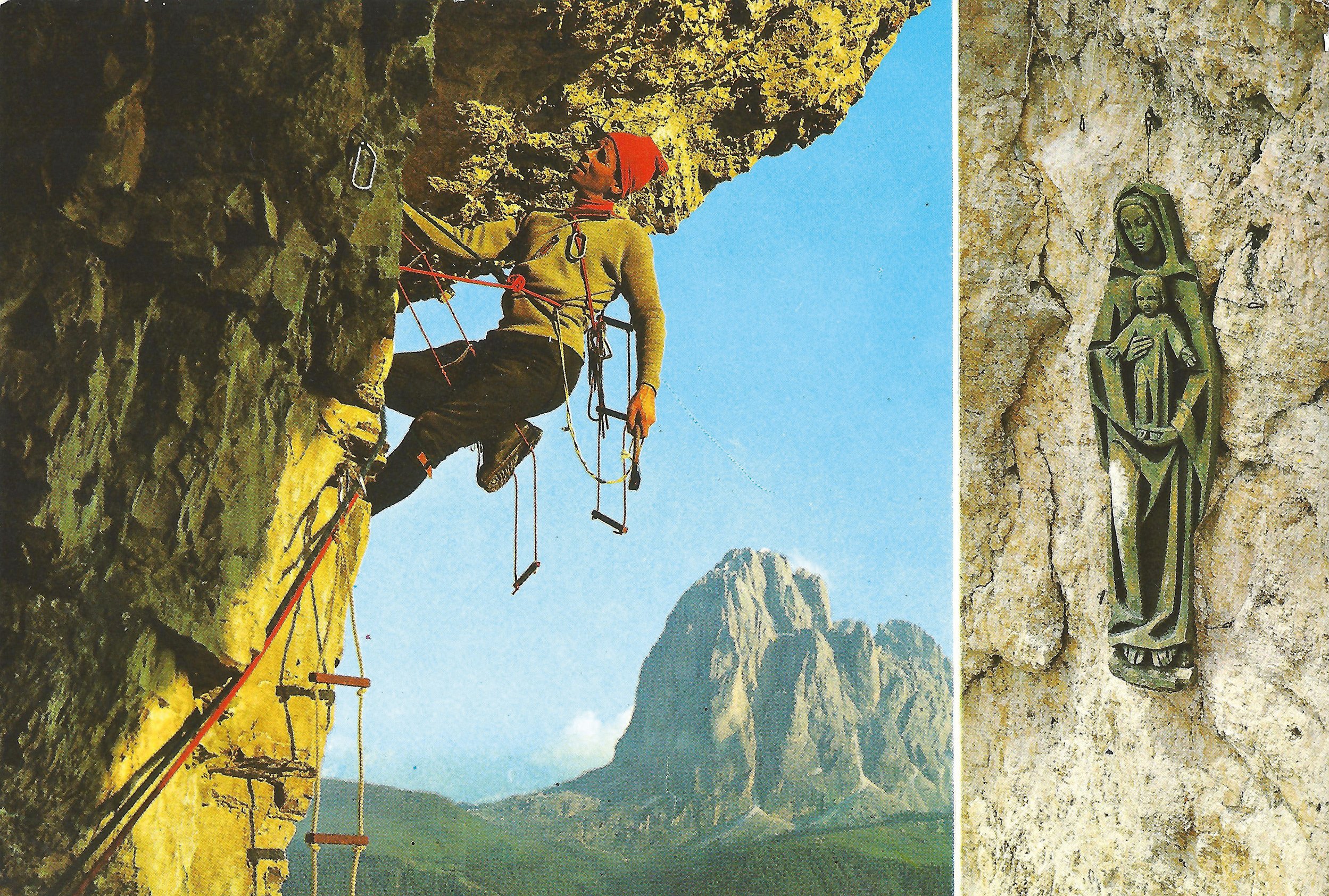
A hand-carved Virgin Mary has been hanging in a natural niche on the eastern wall of the Sassolungo since 1961. It was carved by Flavio Pancheri, an artist from Val Gardena, and has a remar-kable height of 3.20 metres. The bold installation of the sculpture was carried out by the artist himself in collaboration with some mountain guides of the ‘Catores’ group, who commissioned the work of art. In 1953, Giuani Demetz had a cross installed, which was later struck by lightning, while in 2001 a crucifix commissioned by Manfred Runggaldier was erected by Samuel Moroder.

Legrima

The Sassolungo and its icy tears

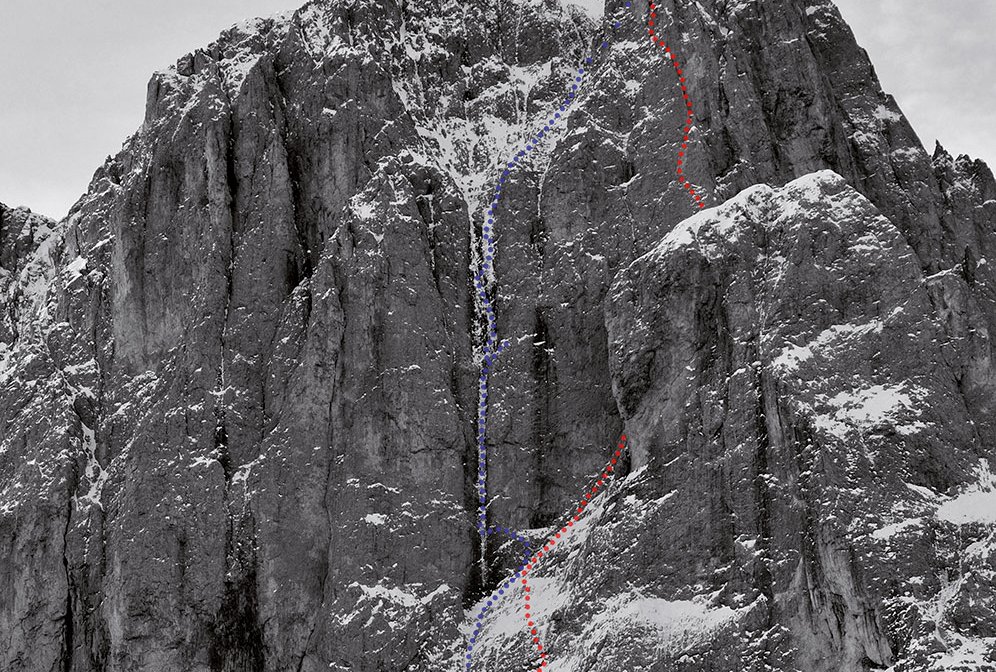
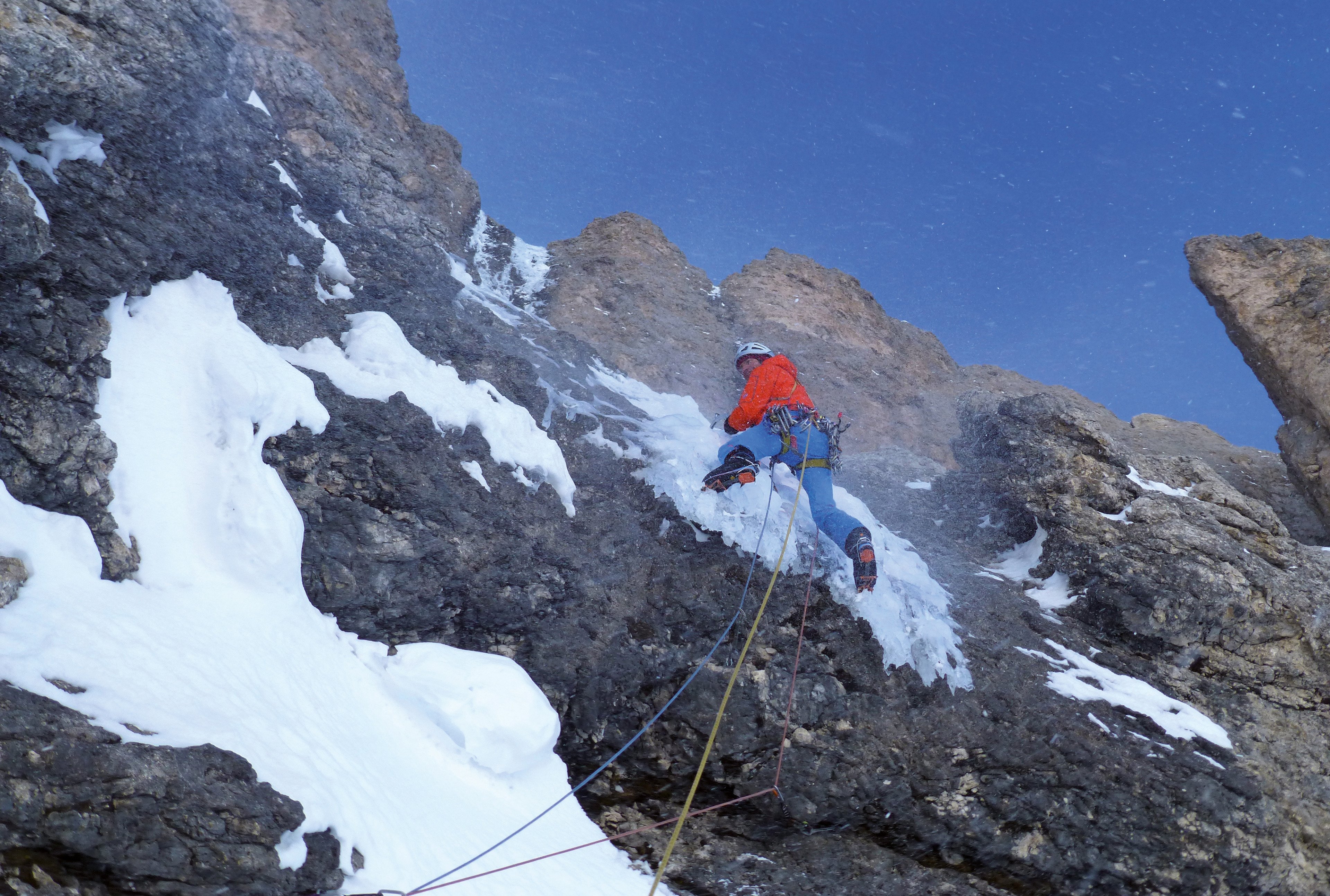
In January 2013, Adam Holzknecht and Hubert Moroder from Val Gardena achieved a brilliant performance. Thanks to their courageous climbing skills, the experienced mountain guides and rescuers managed to conquer a 350 m ice furrow, the ‘Legrima’ (Ladin for tear).

It’s a small waterfall on the north face of the Sassolungo originating at the summit, covered with a sparse layer of ice. The almost impossible undertaking was successfully completed after two days of exertion – the two were rewarded with a stun-ning view and the satisfaction of having added another chapter to the history of alpinism.

Innovative

The gondola lift to the Forcella Sassolungo

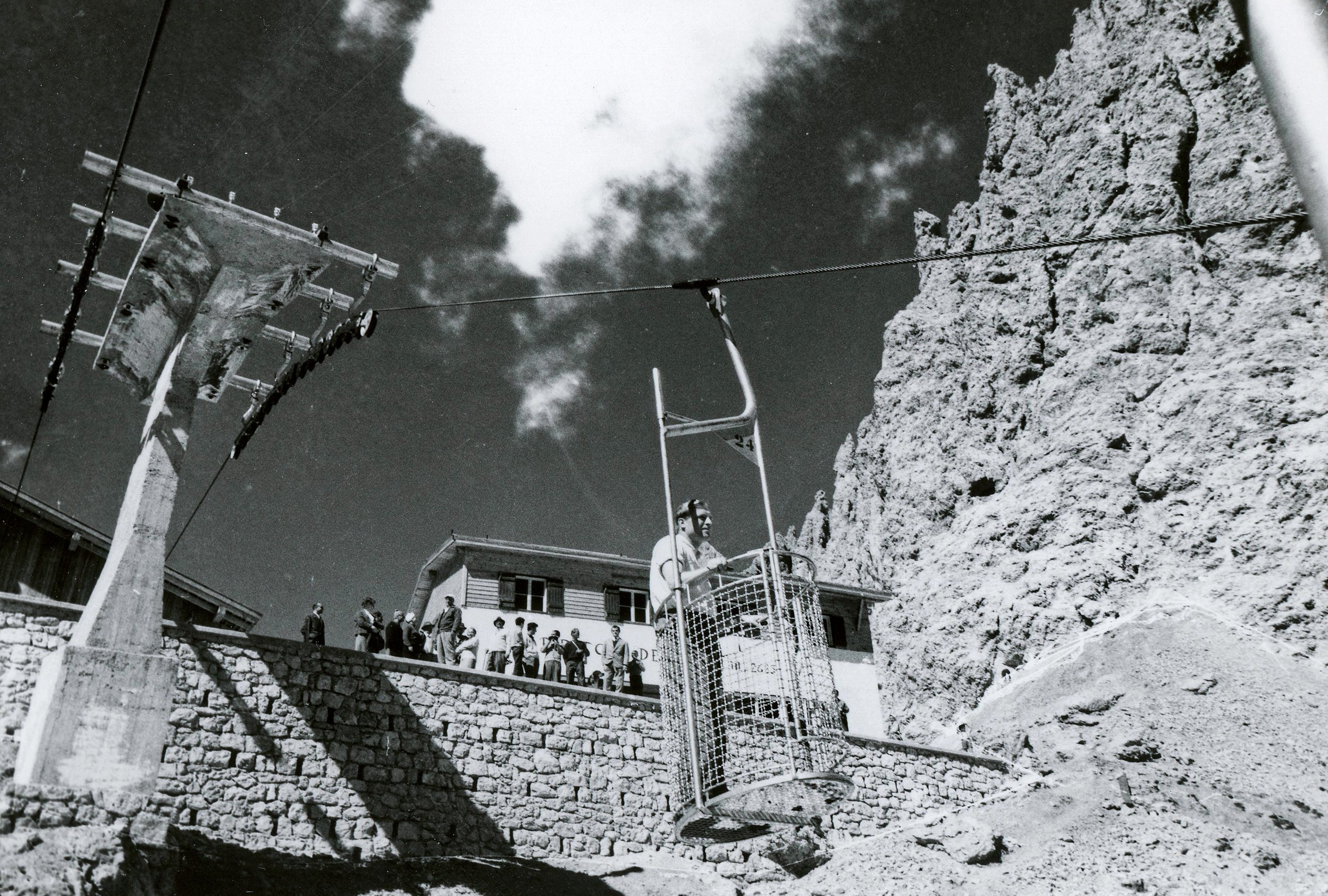
Already in 1957, construction work had started to build a lift from the Passo Sella to the Forcella Sassolungo. It was ope-ned two years later. It was an open ‘basket’ lift designed by an engineer from Ancona, Mr Ciucci, and could transport 2 people, running in winter as well as in summer. In 1971 the lift was renovated and the baskets were replaced by small yellow gondolas. The gondolas have been white since 1992. The lift only ran until the 1989/90 season during winter due to several serious ski accidents and the risk of an avalanche, which should not be underestimated. Even today, the standing gondola lift is still in operation during the summer months and is a worthwhile excur-sion destination. Upon arriving at the mountain station, visitors can enjoy an overwhelming panoramic view of the surrounding mountain world at 2,685 m above sea level.

Your way to Val Gardena


Your holiday destination in the heart of the Dolomites – how to get there.