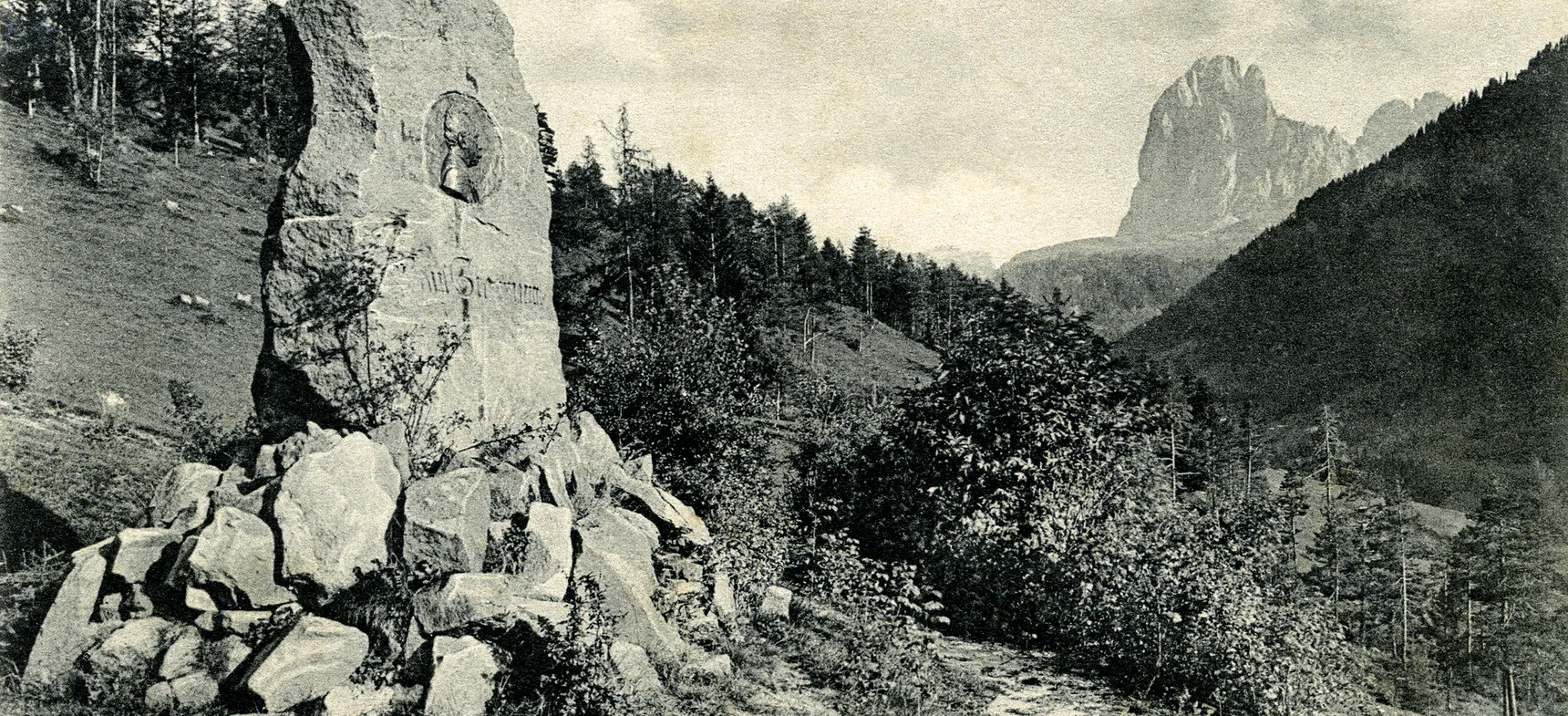
Walk to the monument of Paul Grohman and a short excursion into geology: The Sassolungo Reef

  • Starting point: Ortisei Parish church
  • Level: medium
  • Duration: just under an hour

From the parish church of Ortisei, head into the valley along the Luis Trenker promenade to the “Zirm” restaurant. Follow the promenade until you reach a small playground with a football field. Turn left. On the small path continue uphill to Grohmann-Street. Here the Grohmann-path branches off above the road. Finally, over a shady little valley and picturesque me-adow slopes, reach Paul Grohmann’s memorial: made with red porphyry featuring a bronze relief. Enjoy the wonderful view over the Sassolungo Group.
If you are not tired yet, after another hike of about half an hour you will reach the St. Jakob’s church above. Descend by retracing your steps or via Col de Flam.
The Sassolungo reef

Herwig Prinoth. PhD – Paleontologist

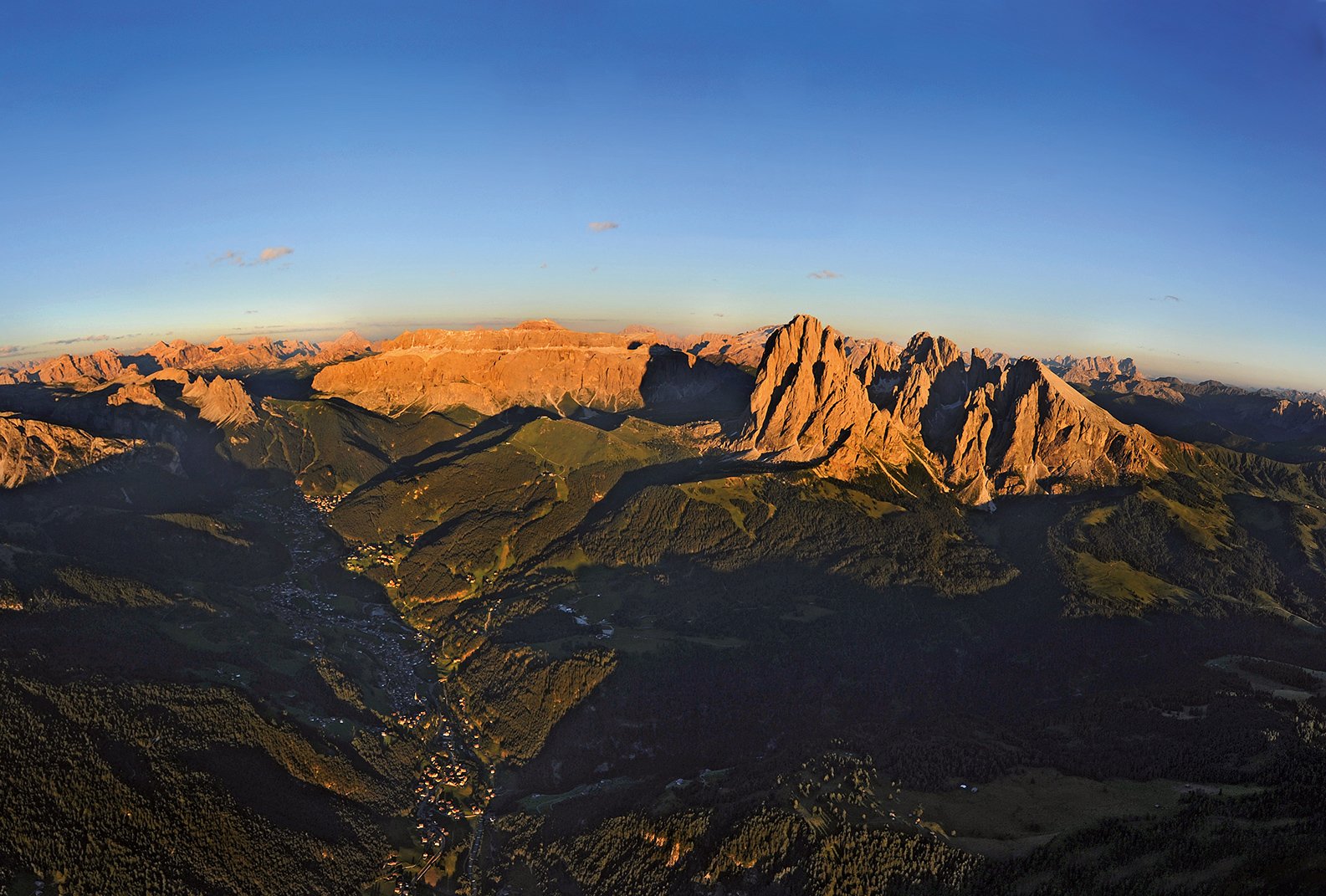
In the Middle Triassic Epoch, about 240 million years ago, the area where the Dolomites would later form was much further south, close to the equator and covered by the vast Tethys Ocean that stretched from Spain to China.

This tropical ocean was teeming with life: calcareous algae, calcareous sponges and corals deposited their skeletons on the seafloor and bacteria produced limestone crusts. Over millions of years, these limestone skeletons piled up to form huge reefs up to 800 m high, comparable to today’s coral reefs. The Sassolungo was such a ring-like reef, similar to the atolls of the Maldives and Seychelles. The reef-building organisms grew on the flanks of these reefs, whose skeletons broke off again and again after storms, sliding into the ocean’s depth. This is how the layers of over-lapping detritus came into being.

The Sassopiatto is still the original, perfectly preserved flank of a reef.
The Sassolungo reef was then completely buried for millions of years by other softer marine deposits and the limestone skeletons were transformed into another rock, the dolomite. During the Alps’ orogeny, the reefs of the Dolomites were lifted out of the sea and the erosion of the last millions of ye-ars exposed them again. So today we can walk on the former seabed and admire the huge reefs of the Dolomites, of which the Sassolungo is one of the most beautiful.


Your way to Val Gardena

Your holiday destination in the heart of the Dolomites – how to get there.